Design isn’t just about making things look beautiful—it’s about influencing how people feel, think, and behave. When someone sees a visual—whether a thumbnail, banner, poster, or ad—they react in less than 0.2 seconds. And that reaction is powered by psychology in graphics.
Why Psychology in Graphics Matters More Than Ever
As digital content explodes across platforms, users scroll faster, skip quicker, and judge visuals instantly. In this environment, every designer faces one challenge:
How do you communicate effectively in a second?
That’s where psychology comes in.
Psychology in graphics helps your visuals:
- capture attention
- build trust
- guide the viewer’s eyes
- evoke emotions
- influence decisions
- improve clarity and consistency
If you can understand the why behind design decisions—not just the how—your work becomes more strategic, more effective, and more memorable.
1. The Psychology of Color
Colors affect the human brain before we consciously register them. Research in behavioural marketing shows that color increases brand recognition by up to 80% and directly influences mood and buying decisions.
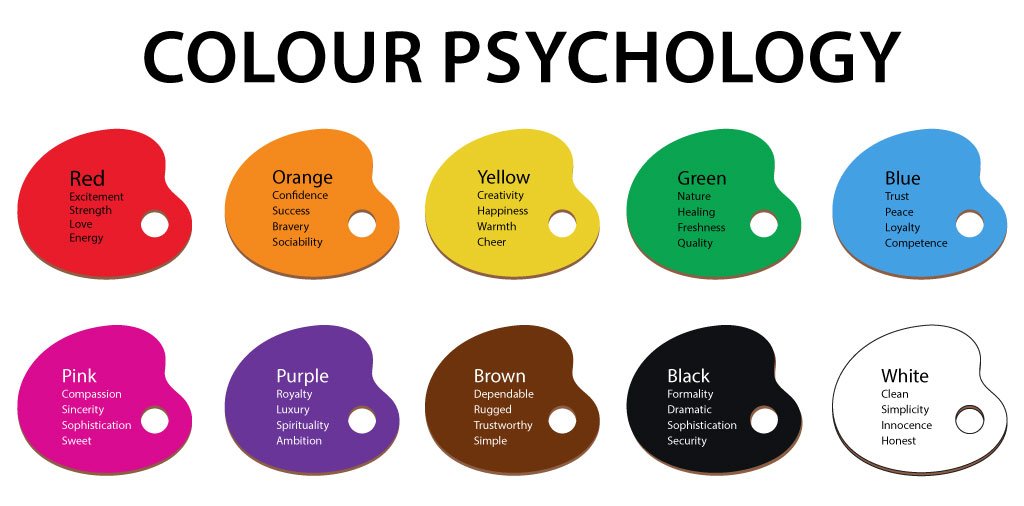
What each color communicates:
| Color | Psychological Meaning | Where It Works Best |
|---|---|---|
| Red | Urgency, passion, attention | Food ads, sale banners, warnings |
| Blue | Trust, calmness, reliability | Tech, banking, SaaS |
| Yellow | Creativity, joy, energy | Children’s brands, callouts |
| Green | Health, growth, harmony | Wellness, environment |
| Purple | Luxury, imagination | Beauty, premium branding |
| Black | Power, elegance, authority | Luxury, fashion |
| White | Simplicity, clarity, purity | Minimalist designs |
Real-world use cases:
- Food brands use red and orange to stimulate appetite.
- Tech companies use blue to communicate security.
- Eco-friendly brands use green to reflect nature.
Using color psychology intentionally allows you to control emotion and create designs that “feel right” to the audience.
2. Shape Psychology
Shapes speak a silent language. They influence how viewers interpret the personality of a design or brand.
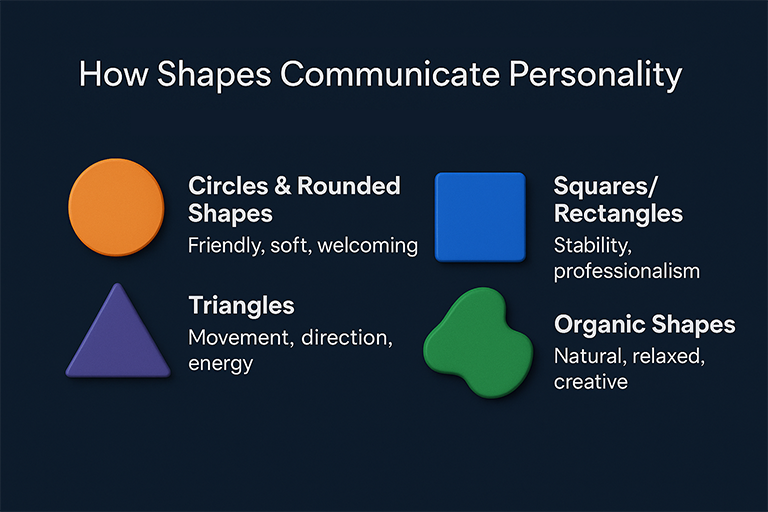
What different shapes communicate:
- Circles & rounded shapes: friendliness, community, softness
- Squares & rectangles: structure, stability, professionalism
- Triangles: direction, conflict, movement
- Organic/irregular shapes: creativity, natural flow, uniqueness
Why shapes matter:
When designing for a corporate brand, sharp rectangles communicate strength and professionalism. But for a kid’s brand, round shapes feel safer and more playful.
Shapes don’t just decorate your design—they define tone and energy.
3. Typography Psychology
Typography controls readability, emotion, and personality. A single font choice can change the entire mood of a design.
Types of fonts and their psychology:
- Sans-serif: modern, clean, neutral
- Serif: classic, trustworthy, elegant
- Slab serif: bold, authoritative
- Script/handwritten: creative, feminine, expressive
- Bold weights: power, urgency
- Light weights: softness, simplicity
Important insight:
A playful script font might work for a bakery brand, but it would ruin the credibility of a financial service website.
Typography must fit the emotion, purpose, and audience of the design.
4. Visual Hierarchy
People don’t view designs randomly—they follow natural reading patterns like the Z-pattern or F-pattern.
This is why hierarchy is critical.
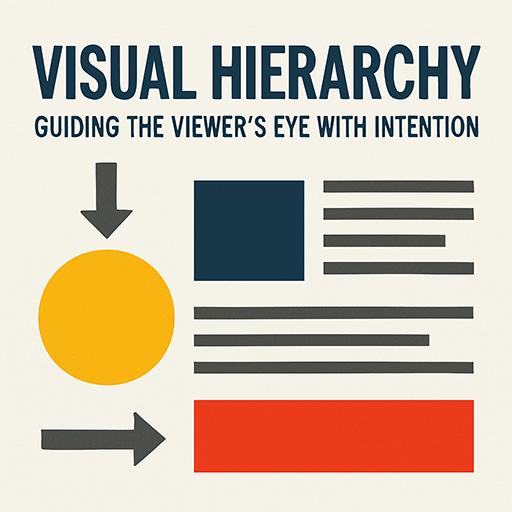
Hierarchy helps viewers see:
- What’s most important
- What to read first
- Where to go next
- What action to take
How to build hierarchy:
- Big, bold headlines
- Clear subheadings
- Smaller, softer body text
- Strategic spacing
- Contrast in color or weight
Good hierarchy makes your design feel intuitive. Bad hierarchy confuses users and kills engagement.
5. Space & Balance
White space isn’t empty—it’s active space that lets your design breathe.
Cognitive research shows that clutter increases mental load, while minimal spacing reduces stress and improves retention.
Benefits of good spacing:
- clearer message
- better focus
- more premium appearance
- improved readability
- stronger visual flow
Crowded designs feel cheap and unprofessional. Balanced designs establish trust.
6. Emotional Design
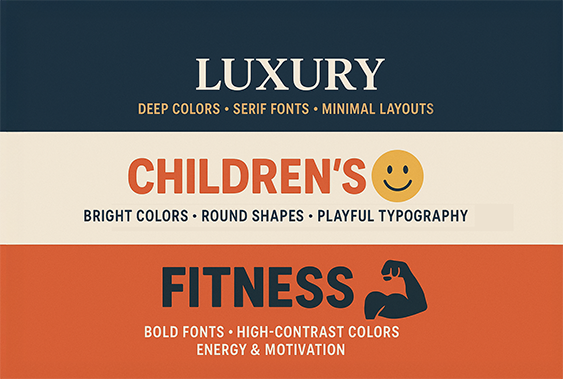
Every brand wants to be remembered — and emotions are the strongest trigger of memory.
Examples of emotional design done right:
- Luxury brands use deep colors, serif fonts, and minimal layouts to evoke exclusivity.
- Children’s brands use bright colors, round shapes, and playful typography.
- Fitness brands use bold fonts and high-contrast colors to convey energy and motivation.
Design that connects emotionally leaves a long-lasting imprint.
7. Cognitive Ease
People stay longer when something feels effortless.
“Cognitive ease” is the science of reducing mental load so users can understand your content faster.
How to achieve cognitive ease:
- Simple layouts
- Logical alignment
- Clear spacing
- Consistent colors
- High contrast
- Familiar icons
- Readable fonts
If the user has to think too much, you lose them.
When design feels easy…
the brand feels trustworthy.
8. Comparison
| Basic Design | Psychology-Driven Design |
|---|---|
| Looks visually nice | Influences emotion & behavior |
| Uses random colors | Uses colors based on meaning |
| Fonts chosen for style | Fonts chosen for personality |
| Layout just placed | Layout planned using hierarchy |
| Designer guesses | Designer predicts user reaction |
Psychology transforms design from art into strategy.
9. Key Insights to Apply in Your Next Project
- Start your design by choosing the emotion you want to trigger.
- Pick colors that support the message.
- Use shapes intentionally.
- Choose fonts that reflect brand personality.
- Apply hierarchy to guide the flow.
- Leave generous white space.
- Reduce cognitive friction with simplicity and clarity.
This approach works for thumbnails, YouTube posts, branding, UI, ads, and more.
Conclusion: Psychology Makes Your Designs Truly Powerful
Great design isn’t about adding more elements — it’s about making every element meaningful.
When you understand psychology in graphics, you’re not just a designer anymore…
you’re a communicator, a strategist, and a storyteller.